
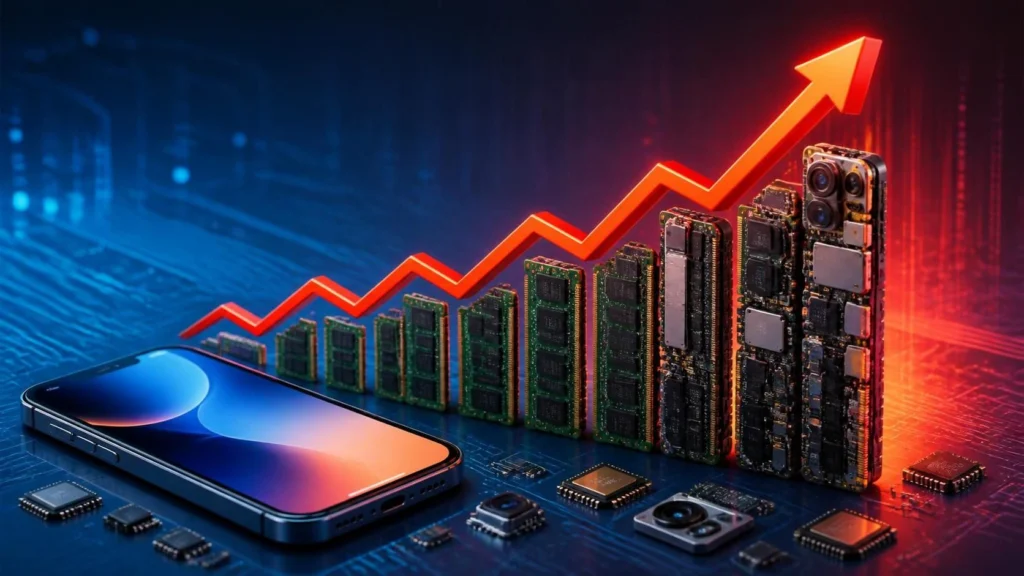
The price of memory chips has risen sharply, putting pressure on everything from laptops and gaming PCs to smartphones. DRAM prices have more than doubled since late 2025 in some markets, while NAND storage costs have also climbed.
The main cause is the rapid expansion of artificial-intelligence data centers. AI servers require huge quantities of high-bandwidth memory and other advanced chips. To meet that demand, manufacturers are directing more production capacity toward enterprise and AI hardware, leaving less conventional DRAM and NAND available for consumer electronics.
This shift has created a familiar supply-and-demand problem. Cloud providers are buying memory aggressively, while chip manufacturers cannot expand production overnight. Some suppliers have reportedly reduced or paused price quotations, suggesting that they expect the market to remain tight.
Smartphone makers are especially vulnerable at the budget and mid-range levels. Memory can account for roughly 15–20% of a mid-range phone’s bill of materials, so even a moderate increase affects already-thin profit margins. Manufacturers now face three choices: raise prices, reduce specifications, or absorb the cost and accept lower profits. idc.com
Consumers may therefore see fewer affordable phones with generous storage and RAM configurations. Entry-level models could launch with less memory, while higher-capacity versions may carry much larger premiums. Analysts also expect buyers to keep their current phones longer, choose refurbished devices, or delay upgrades. One industry forecast estimates that smartphone prices could rise by about 13% in 2026 if memory costs remain elevated. gartner.com
The impact will not be identical for every brand. Large companies with long-term supply agreements and stronger cash reserves may be better positioned than smaller manufacturers. Budget-focused brands, however, have less room to absorb component inflation. The result could be a wider gap between premium phones and affordable models.
For buyers, the practical lesson is simple: prioritize long-term value. A phone with adequate storage, durable software support, and a reliable battery may be a better investment than upgrading every year. Until memory production catches up with AI-driven demand, higher prices—and tougher choices—are likely to remain part of the smartphone market.